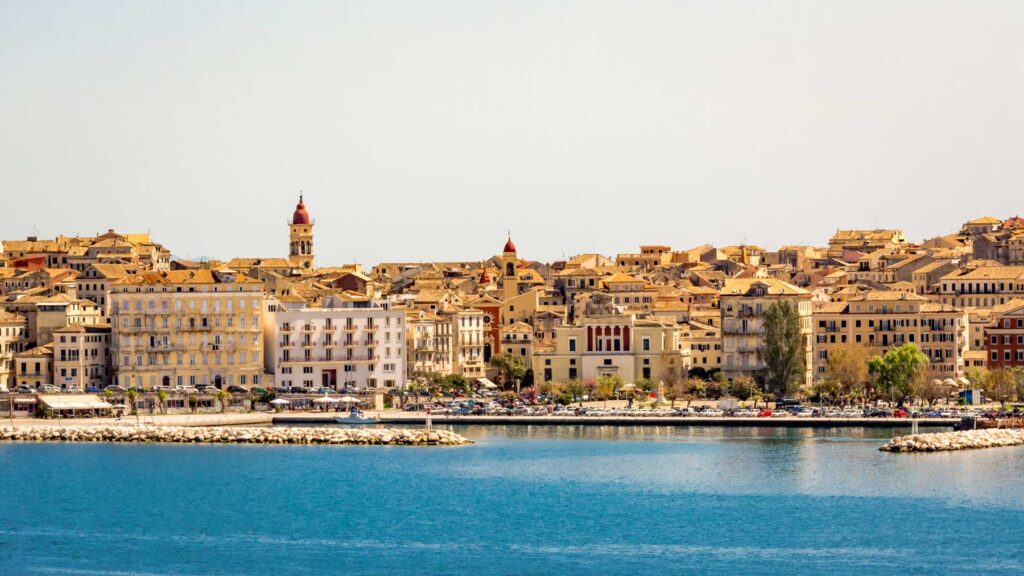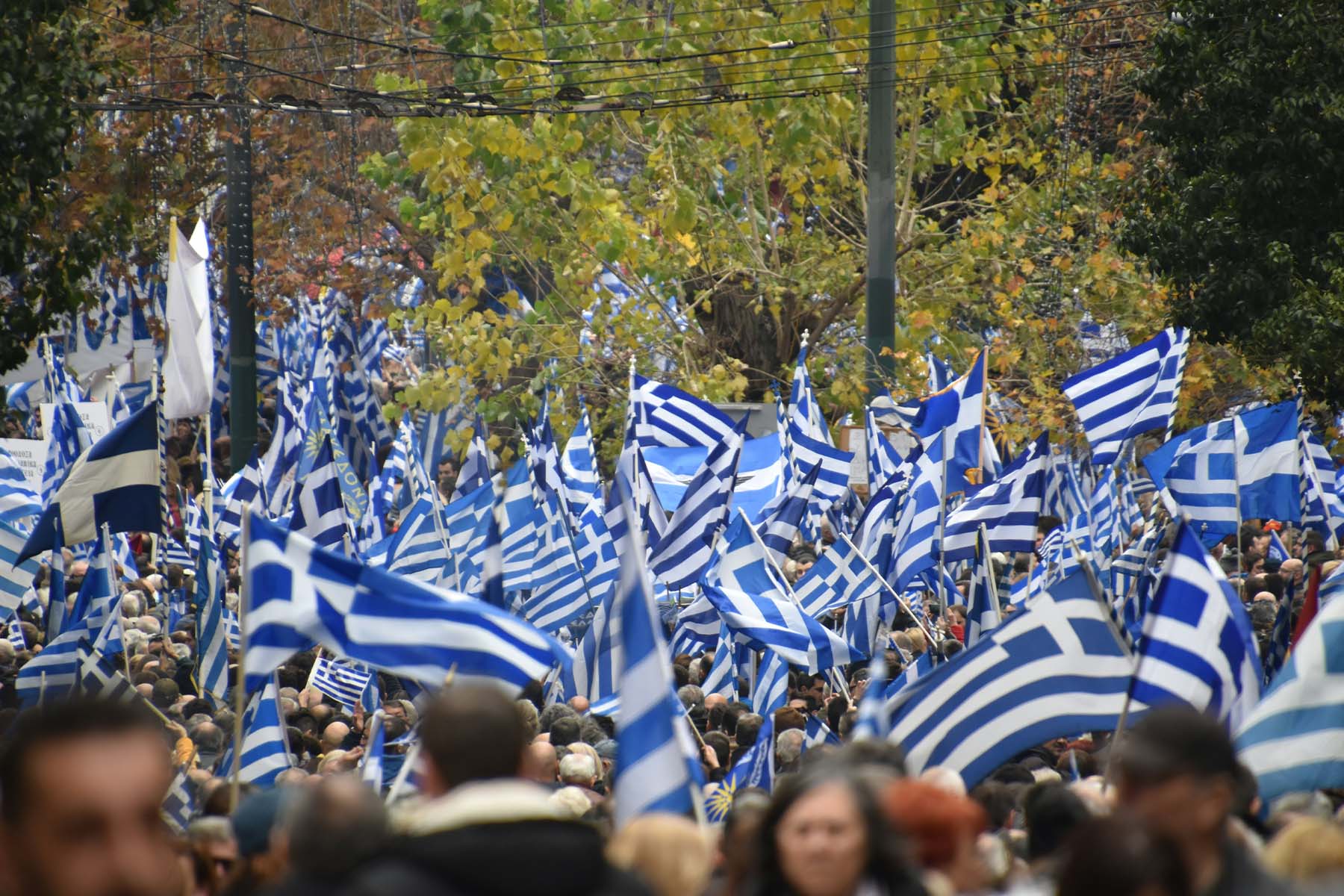
On the morning of October 28, Corfu Town is covered in blue and white flags. Schoolchildren in their best clothes march past the Spianada, the island’s famous philharmonic bands play, and families line the streets to watch. This is Oxi Day, one of the most important national holidays of the year. Oxi Day Corfu is a chance to see the town at its most proud, and a reminder of how deeply the Second World War marked the island.
What Oxi Day Commemorates
In the early hours of 28 October 1940, the Italian ambassador in Athens delivered an ultimatum to the Greek prime minister, Ioannis Metaxas. Mussolini demanded that Italian troops be allowed to enter Greece and occupy strategic locations. Metaxas refused. According to tradition, his answer was a single word: “Oxi”, meaning “No”.
Within hours, Italian forces attacked from Albania. The Greek army pushed them back into the Albanian mountains in a campaign that surprised the world and gave the Allies one of their first successes of the war. October 28 is celebrated across Greece as a symbol of national resistance and courage.
How the Day Is Marked in Corfu Town
The celebrations in Corfu Town centre on the Spianada and the streets around it.
- Church services are held in the morning, including a service at the cathedral, attended by local officials.
- Wreath laying takes place at the war memorials in town.
- The parade is the highlight. Schoolchildren, students, scouts, military units and the town’s philharmonic bands march through the centre, usually along the Spianada and the surrounding streets, watched by crowds of locals.
The parade normally takes place in the late morning, but exact times and routes vary, so check the local programme closer to the day. Arrive early if you want a good spot near the Spianada.
Corfu Under Occupation
Corfu felt the war almost from the beginning. Its position, just across the water from Italian-held Albania, made it an early target, and the town was bombed by Italian aircraft in the first months of the conflict.
After Germany invaded Greece in April 1941, Corfu was occupied by Italy. Mussolini’s government had long regarded the Ionian islands as having historical links with Venice and Italy, and the occupation brought Italian administration and attempts to make the island Italian.
The German Takeover and the Bombing of 1943
In September 1943, Italy signed an armistice with the Allies. On Corfu, the Italian garrison refused to surrender to the Germans and fought back. German forces responded with a heavy air bombardment of Corfu Town in mid September 1943, followed by landings on the island.
The bombing caused enormous damage to the old town. Among the buildings destroyed were the Municipal Theatre, where the Serbian parliament had met during the First World War, the Ionian Academy, the Municipal Library and the Ionian Parliament building. Whole blocks were lost, including much of the Jewish quarter and the town market. Many of the gaps you see in the old town today, filled with newer buildings, date from this destruction.
After fierce fighting, the Italian garrison surrendered, and Germany took full control of the island.
1944 and Liberation
The German occupation lasted about a year. In June 1944, the Jewish community of Corfu was rounded up and deported to Auschwitz, a tragedy we cover in detail in our post on the Evraiki.
In October 1944, as German forces withdrew from Greece, Corfu was liberated, and British forces arrived on the island. The years that followed were difficult, as Greece went through a civil war and the slow work of rebuilding. The restored Ionian Parliament building and the modern structures in the old town are reminders of that period of reconstruction.
Practical Notes for Visitors on October 28
- Public holiday. Banks, public offices and many shops are closed. Cafés, restaurants and some tourist shops in the old town usually stay open.
- Road closures. Streets around the Spianada and the parade route are closed to traffic for much of the morning. Plan your journey into town with this in mind.
- Parking. Parking in the centre is very difficult on the day. Arrive early or use a transfer.
- Museums. Opening hours may change on national holidays. Check in advance.
- Etiquette. The parade is a proud moment for local families. Stand respectfully during the national anthem and the wreath laying.
Seeing the History Today
Several places in and around Corfu Town help to tell the story of the island during the war. Walking through the old town, you can see where the bombed buildings once stood, pass the site of the lost Municipal Theatre and the restored Ionian Parliament, and stop at the Holocaust memorial near Solomou Square. The Old Fortress, where Corfu’s Jews were held in 1944, also carries this history.
Explore Corfu’s History with Corfu Compass NSK
The story of Corfu in the Second World War is written into the streets of the old town. Corfu Compass NSK offers guided tours of Corfu Town and the island’s interior, and transfers into town on busy holiday mornings, so you can see the parade and understand the history behind it.
Contact Corfu Compass NSK to plan your visit to Corfu Town for Oxi Day.