Paleokastritsa is one of the most visited places on Corfu, and for good reason. But a short distance along the same coastline, past the point where the tour buses turn around, the shore breaks into a series of small coves that almost nobody walks down to. Rovinia and Limni are two of them.
Rovinia
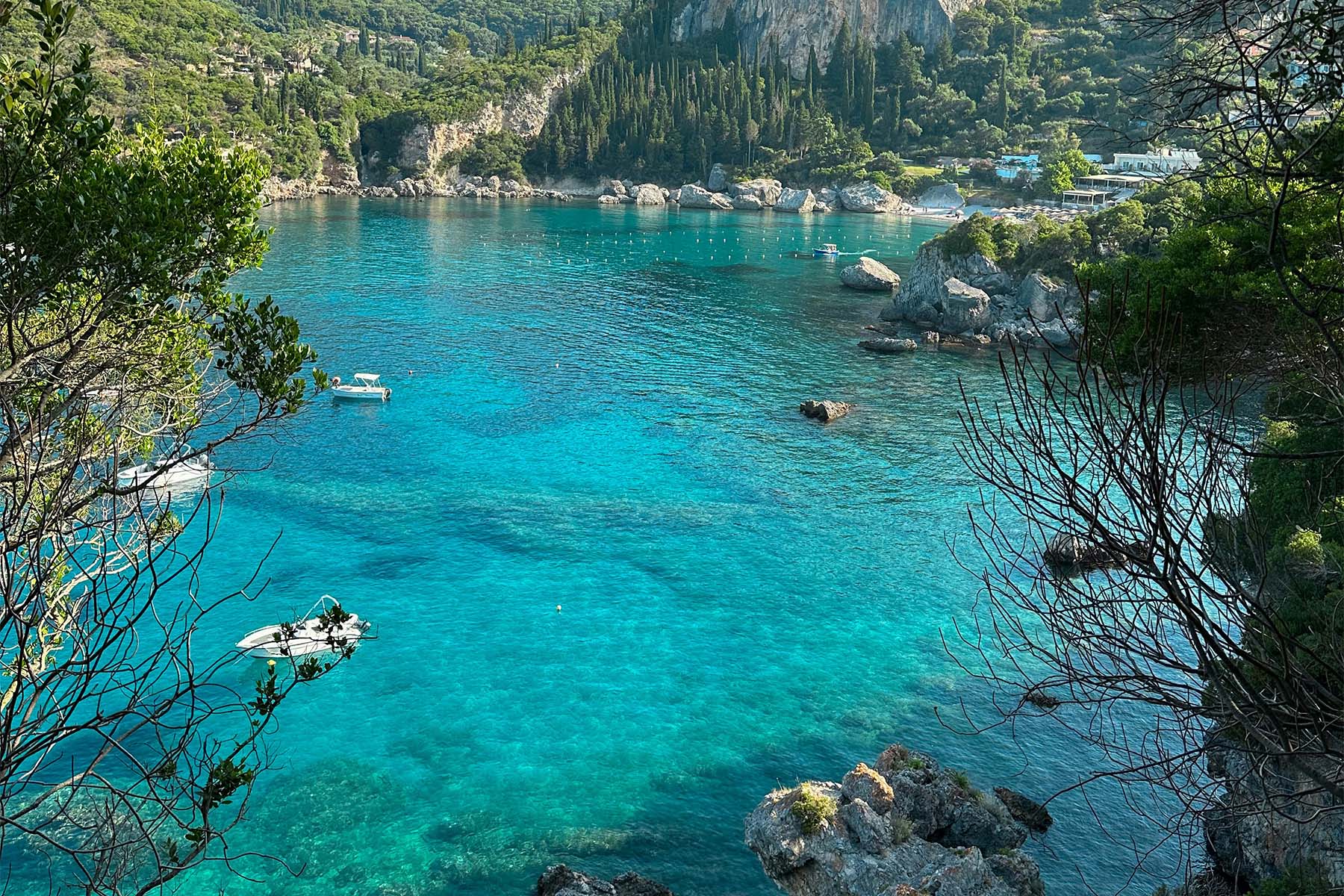
Rovinia sits in a narrow gap between wooded headlands, a mix of pebble and coarse sand with water that goes from pale turquoise to deep blue within a few metres of the shore. There is a small rock arch at one end and a scatter of boulders that make good snorkelling, and on most days in September you will share it with a handful of people rather than a crowd.
It has appeared in a film or two over the years, which occasionally brings a boat in, but there is no road to the sand and that keeps the numbers down.
Limni
Limni is smaller and quieter still — a short curve of pebbles tucked below the cliffs, with a seasonal beach bar that operates in high summer and often winds down as autumn approaches. If you want the version of Corfu that existed before the resorts, this is close to it.
How to Get There
Both coves are reached from the road between Liapades and Paleokastritsa.
- By car, follow signs toward Liapades and look for the turnings down toward the coast. Parking is informal — a widened patch of dirt rather than a car park — and it fills quickly in high season. In September you will usually find space.
- On foot, the descent from the parking area runs through olive groves and terraces. It is steep in places, loose underfoot, and takes roughly ten to fifteen minutes down. Coming back up takes longer.
- By boat, water taxis and small hire boats from Paleokastritsa reach both coves, which is the easy option if the walk does not appeal.
What to Bring
There are no reliable facilities at either cove outside peak season, so plan as you would for a beach with nothing on it.
- Shoes with grip. The paths are not dangerous but they are not sandals-friendly either.
- Water and food. Assume nothing will be open.
- Shade. Both coves get some afternoon shadow from the cliffs, but not much at midday.
- A snorkel and mask. The rock and clear water make this some of the better snorkelling on this stretch of coast.
Why September Works
The walk down is the whole barrier to entry, and in August heat it is genuinely unpleasant. In September the descent is manageable, the sea is at its warmest, and the coves are close to empty on a weekday. It is the best month of the year to make the effort.
The Difference from Paleokastritsa Itself
Paleokastritsa’s own bays are worth seeing — the monastery, the boat trips to the sea caves, the view down from Bella Vista. But they are organised places, with sunbeds and parking and a rhythm to the day. Rovinia and Limni are the opposite: nothing arranged, nothing provided, and no one telling you where to sit.
If you have a day in this part of the island, doing both makes sense. See the famous bays in the morning, then walk down to a cove in the afternoon when the light comes round.
Reach the Coves with Corfu Compass NSK
Neither cove is served by a bus, and the turnings off the Liapades road are easy to miss without your own vehicle. Corfu Compass NSK’s car rental gives you the freedom to find them at your own pace, and our guided tours cover the Paleokastritsa coastline for anyone who would rather not navigate the tracks themselves.
Contact Corfu Compass NSK to arrange your car rental or coastal tour.