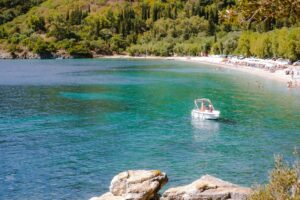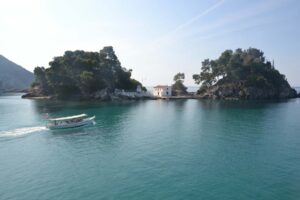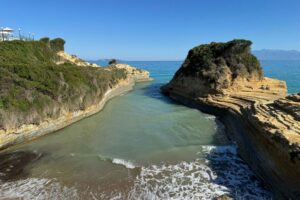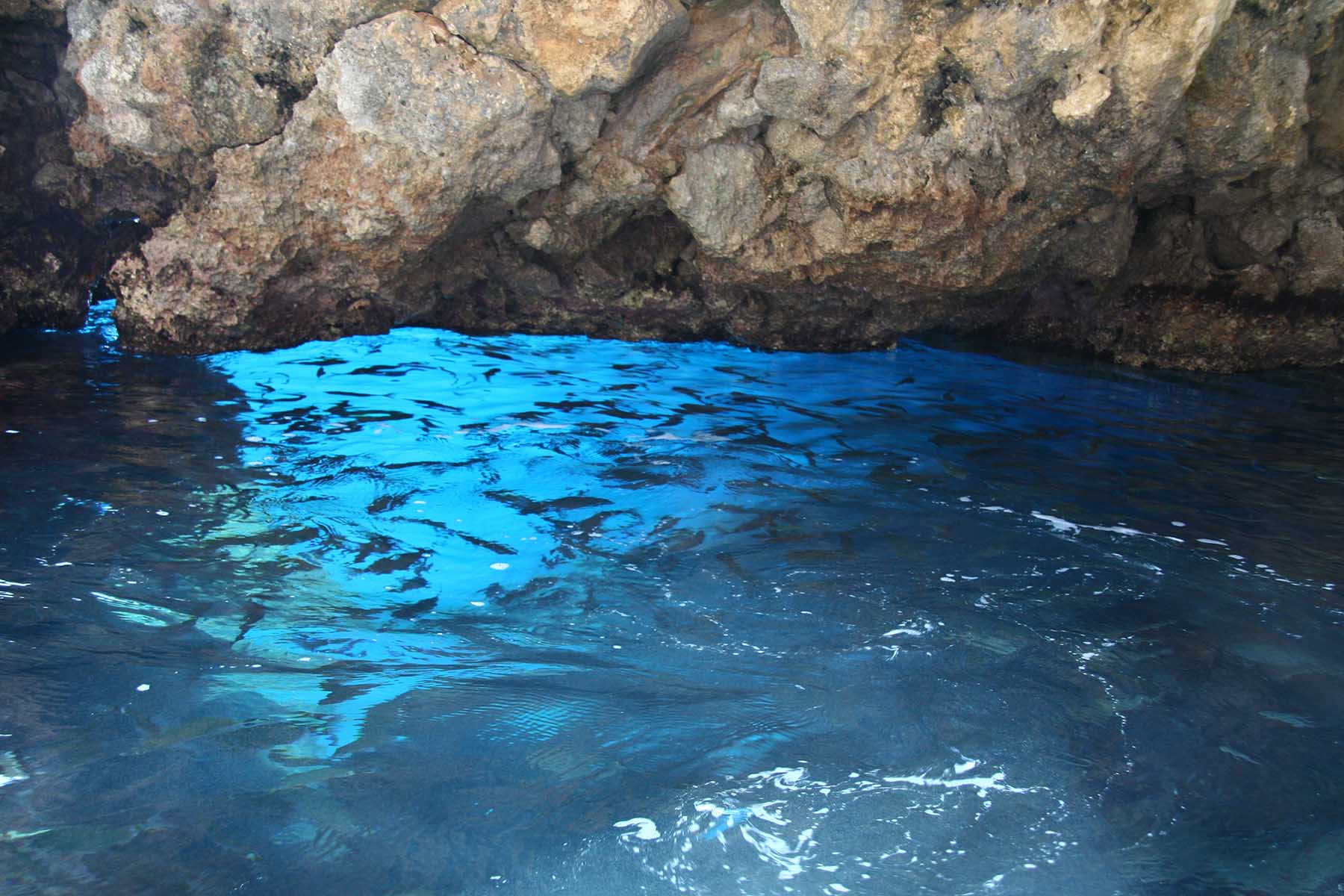
The Paleokastritsa sea caves are the reason most people take a small boat out from the main beach. They are the reason I still do too, after years of living on this island. The west coast here is a run of deep, winding bays, rock arches and caverns where the water turns from turquoise to almost black. This guide covers how to see the caves, the quieter coves of Rovinia and Limni nearby, the monastery on the headland, and the view from Bella Vista above it all.
How to See the Paleokastritsa Sea Caves
The caves are cut into the cliffs on either side of the main bays. You can only reach them from the water, so you need a boat. Local boatmen run trips from the small jetties around the main beach through the season. On calm days the smaller boats slip inside the larger caves, and many stop so you can swim off the side in deep, clear water.
Glass-bottom boats, water taxis or your own boat
- Short cave tours leave from the main beach and last well under an hour. They are the easiest choice for families.
- Water taxis run to beaches further along the coast that have no road, including Rovinia (see below).
- Small self-drive boats can often be hired for a few hours, usually without a licence for lower-powered engines. Ask the hire desk about the rules and the wind forecast before you set off.
Best time of day
Go in the morning. The sea on the west coast is usually at its calmest before the afternoon breeze picks up, and the low sun lights up the water inside the caves. By mid-afternoon in July and August the jetties are busy and the swell can stop boats from going inside.
What to bring
- Swimwear on under your clothes, and a towel
- Water shoes or sandals with grip for the rocks
- A snorkel and mask. The rocky edges are full of fish.
- Sunscreen, a hat and drinking water
- Cash for the boatmen and beach bars
The Bays of Paleokastritsa
Paleokastritsa is not one beach but a group of bays, usually counted as six, folded around green headlands. The main bay has the boat jetties, tavernas and sunbeds. The smaller bays are reached on foot or by water. The sea here is noticeably cooler than on the east coast, which feels wonderful in August.
Rovinia and Limni: the coves without a road
South of the main bays, towards Liapades, Rovinia and Limni are two coves you reach by water taxi or by a steep path down from the road. Rovinia is pebble and coarse sand with clear water for snorkelling and nothing to buy, so bring water and shade. Limni is smaller, with a seasonal beach bar. They are a different kind of day from the busy main bay, and we cover them properly, with access and parking, in our guide to Rovinia and Limni, Corfu’s hidden coves.
The Monastery of the Virgin Mary
On the headland above the bays stands the Monastery of the Theotokos (the Virgin Mary). Its foundation is traditionally dated to the 13th century, though most of the buildings you see today are much later, mostly 18th century. There is a small museum of icons and church treasures, a shaded courtyard and gardens. From the edge of the terrace you look straight down on the coves you have just explored by boat. Dress modestly: shoulders and knees covered. Opening hours change with the season and usually include a midday break, so check locally before you walk up.
Bella Vista and Lakones
Above Paleokastritsa, the village of Lakones clings to the mountainside. Just beyond it is Bella Vista, the viewpoint that appears on half the postcards of Corfu. From there you see the bays, the monastery headland and, on a clear day, the line of the west coast to the north. There are cafés and small shops selling local products, including kumquat specialities, olive oil and handmade goods.
The road up is narrow and winding, with stretches that are effectively single-lane. If you are driving, take it slowly, give way generously and avoid the busiest times around sunset in high season. Many visitors prefer to let someone else drive.
Paleokastritsa Sea Caves on an Organised Day
If you are staying in the north or east of the island, an organised trip removes the driving and parking problems. These are the options we run:
- The Paleokastritsa and Bella Vista tour takes about 7 hours by air-conditioned coach or minibus. It includes roughly three hours of free time in Paleokastritsa for swimming, the monastery or a cave boat trip (paid locally), then a drive through Lakones to Bella Vista. Pickups run from selected areas, including Sidari, Roda, Acharavi, Almyros, Agios Spyridon and Kalamaki.
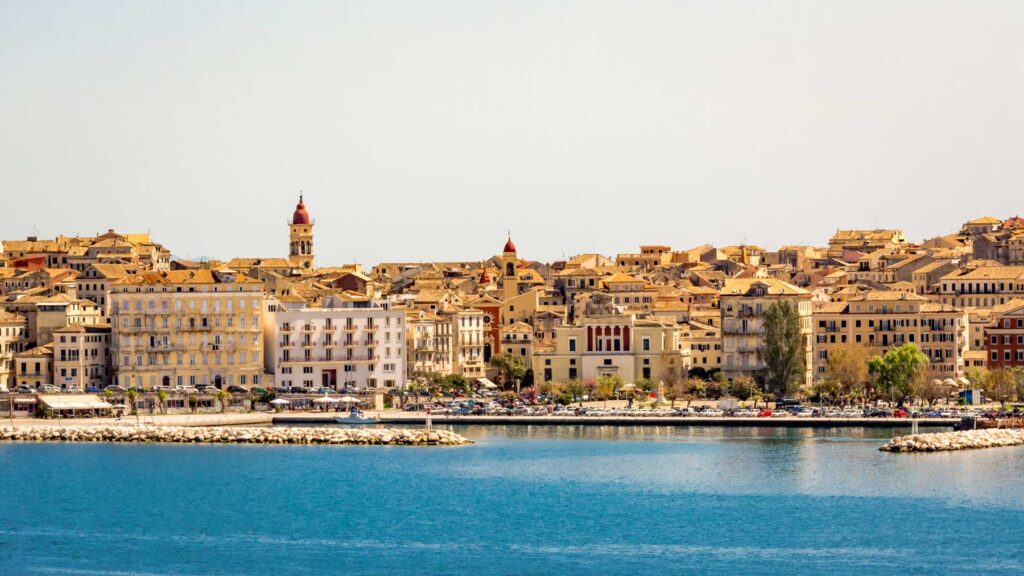
- The Paleokastritsa Monastery and Corfu Town private tour (5–7 hours, with a full-day option) combines the monastery with Kanoni and a guided walk through Corfu Old Town.
- The Corfu Grand Tour combines the Old Town, Kanoni, free time in Paleokastritsa and the Bella Vista viewpoint in one full day.
Combine It with Angelokastro
From Paleokastritsa you can see the ruins of Angelokastro on its crag to the north, and it makes a natural add-on for a morning or late afternoon. Our guide to visiting Angelokastro, Corfu’s Byzantine castle covers the walk up, parking and the castle’s history.
Paleokastritsa FAQ
Can you swim inside the caves?
Boats often stop near or inside the larger caves for a swim when the sea is calm. The crew decides on the day.
Is Paleokastritsa good for children?
The main bay is sheltered and shallow at the edges, and the short cave tours suit families. Rovinia and Limni, with their steep paths, are better for older children.
When is the best month?
June and September give you warm water, calmer bays and fewer boats than in August.
Looking for more west-coast swims? Our best sunset spots in Corfu start just up the road. For a full week’s plan, see the 7-day Corfu itinerary.
See all our Corfu coach trips, including the Paleokastritsa and Bella Vista tour with hotel pickup.