Angelokastro in Corfu is the ruined castle you see on its crag north of Paleokastritsa, around 300 metres above the sea. Its name is often translated as “Castle of the Angels”, though it may come from the Byzantine Angelos family. For centuries it was one of the island’s key strongholds, and it is said never to have been taken by force. Today it is a short, steep climb to the most dramatic view on the west coast. This guide covers the walk up, parking and what to bring, plus the castle’s history and how to combine it with a day in Paleokastritsa.
Angelokastro Corfu: Visitor Essentials
- Where: above the village of Krini, north of Paleokastritsa, on the northwest coast of Corfu.
- Season, hours and tickets: the site opens in the main tourist season and is usually closed in winter. Days, hours and ticket prices change, so check the Ministry of Culture page (odysseus.culture.gr) before you go.
- Parking: a small free car park below the ticket office, plus roadside spaces. It fills up in high season, so arrive early.
- The walk: about 15 minutes, uphill and steep in places, from the ticket office to the top.
- Driving time: about 50 minutes from Corfu Town.
Sources: Hellenic Ministry of Culture (odysseus.culture.gr) for the season; hh.gr for walking and driving times; visitor reports for parking. Last checked 30 Oct 2026. The site also closes on certain public holidays, so check before you go, especially at the start and end of the season.
The History of Angelokastro
Who built it?
The castle is usually attributed to the Despots of Epirus, a Byzantine dynasty that controlled Corfu in the 13th century: either Michael I Komnenos Doukas or his son Michael II. The first written record of it dates from 1272, in the time of the Angevin rulers of Corfu. Exactly when the first walls went up is not known.
A castle that was never taken
Angelokastro guarded the northwest of the island and the sea lanes towards the Adriatic. It worked as part of a defensive network with the castles of Gardiki in the south and Kassiopi in the northeast. During Ottoman raids and sieges in the 16th century, villagers from the surrounding area took refuge behind its walls. The castle held out, which is why locals still speak of it with a certain pride.
What survives
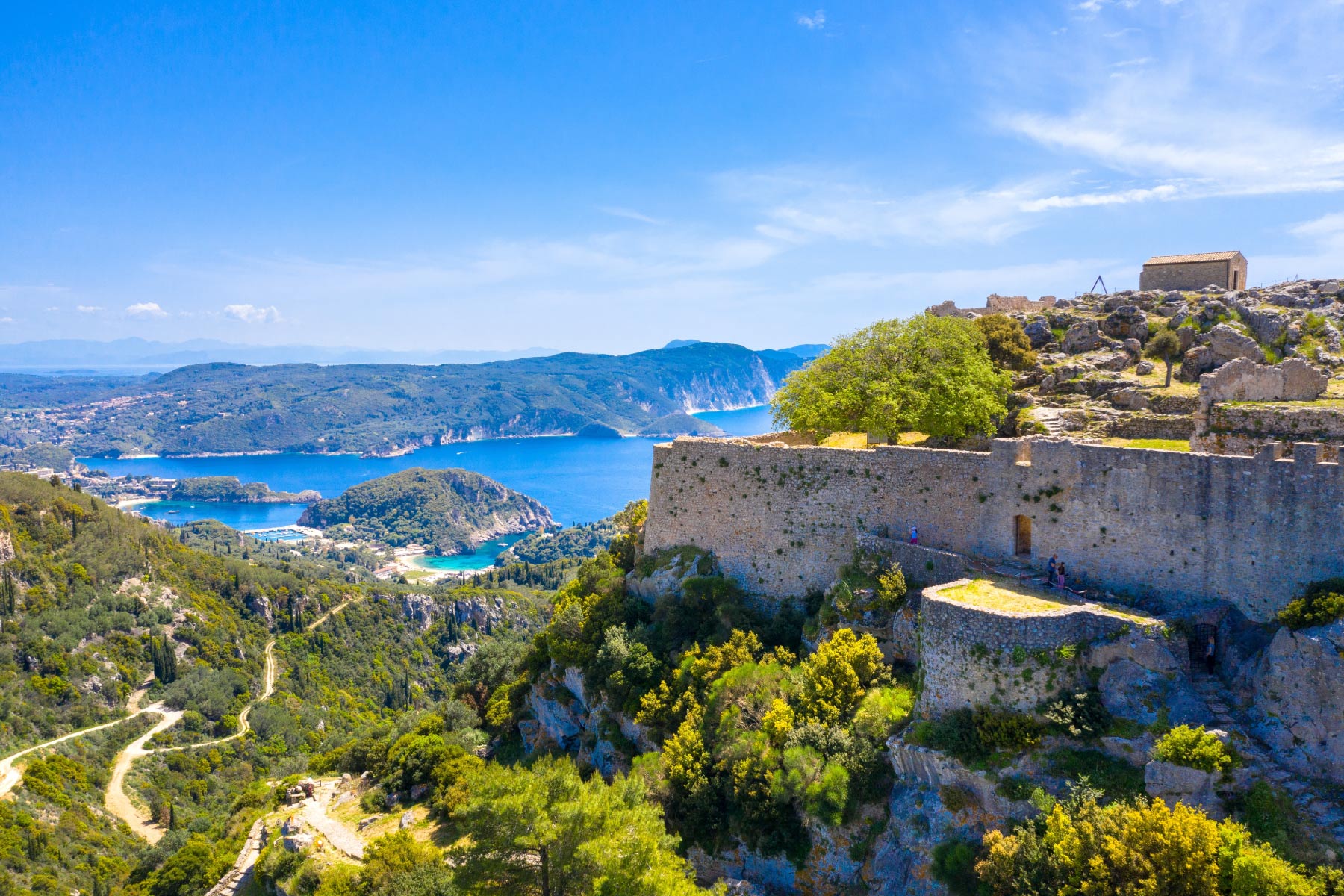
Today you walk through the remains of the gate and walls, past the ruins of buildings and a water cistern, to the small church at the summit. There is also a small cave chapel cut into the rock, dedicated to Agia Kyriaki.
Climbing to the Top
The path from the ticket office is steep, with uneven stone and some exposed edges. Wear proper shoes rather than flip-flops. Most people take about 15 minutes, with stops for photos. There is little shade, so in summer go early, as soon as the site opens, or in the last couple of hours before closing. Bring water: there is no café at the top.
The reward is a view over the green slopes of the northwest coast, the bays of Paleokastritsa to the south and the open Ionian Sea. On a clear day it is one of the best panoramas on the island.
Getting to Angelokastro
By car
This is the easiest way. The final approach through Lakones and Krini is narrow and winding, so drive slowly and expect to give way to buses and oncoming traffic. A small car is a real advantage here. Our guide to getting around Corfu has tips for mountain roads and choosing a rental car.
By bus
Green buses serve the Paleokastritsa area, but services to Krini itself are limited, and you may face a walk of a kilometre or more from the nearest stop. Check the current timetable before you rely on it.
On a tour
None of our tours stop at the castle itself, but the Paleokastritsa and Bella Vista tour takes you to the area. The tour runs through Lakones to the Bella Vista viewpoint, from where, on a clear day, you can usually pick out the castle on its crag to the north, and gives you about three hours of free time in Paleokastritsa.
Combine Angelokastro with Paleokastritsa
Angelokastro and Paleokastritsa make a natural day out together. Do the castle in the morning, then go down to the bays for a swim and a boat into the sea caves. Or spend the day on the beach and climb to the castle in the late afternoon. Our guide to Paleokastritsa’s sea caves, bays and Bella Vista covers the boat trips, the monastery and the quieter coves nearby. Further north, near the village of Afionas, the twin bays of Porto Timoni near Afionas make a good walk if you still have energy. Want to end with a sunset? See our best sunset spots in Corfu.
Practical Tips
- Check the season. The site is usually closed in winter, so check the official dates before planning a spring or autumn visit.
- Wind: the summit is exposed and can be very windy. Hold on to hats and keep children close to you.
- Bring water and sun protection. There is no shade and no café on the way up.
- Accessibility: the steep, uneven path is not suitable for wheelchairs or pushchairs.
Angelokastro FAQ
How long does a visit take?
Allow about an hour: 15 minutes up, time at the top, and the walk down.
What is the best time of day?
Opening time in the morning, for cooler air, softer light and an emptier path. Late afternoon is the next best choice, but leave enough time before closing.
Is it suitable for children?
Older children usually enjoy it. Keep a close eye on younger ones near the walls and edges.
Can I visit in winter?
Usually not: the archaeological site normally closes in winter, so check the official dates. You can still see the castle from the road and from Bella Vista.
Planning a full week? Our 7-day Corfu itinerary shows where Angelokastro and the west coast fit best.
See all our Corfu coach trips, including the Paleokastritsa and Bella Vista tour.