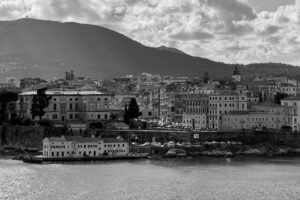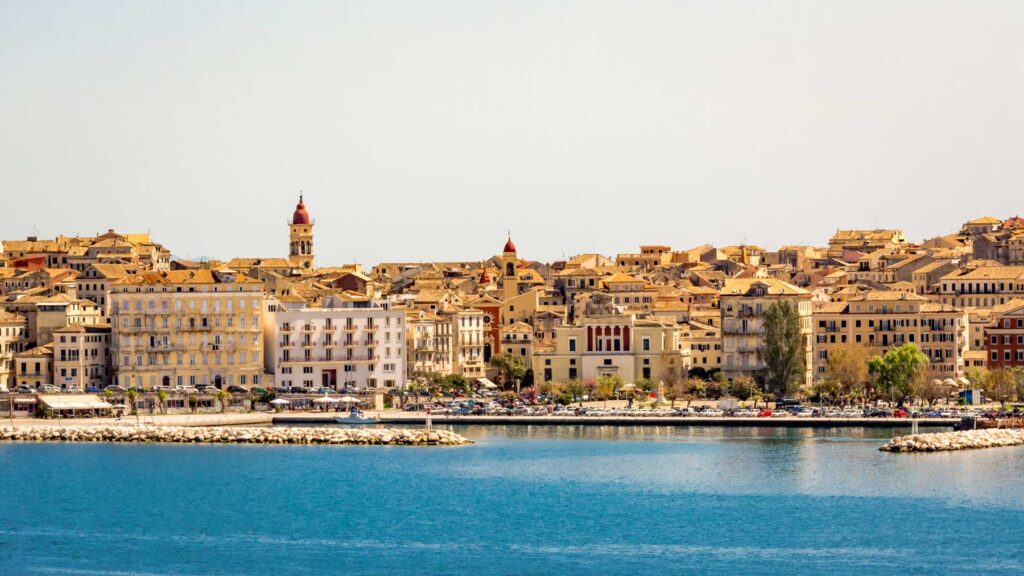
Ask any Corfiot why so many men on the island are named Spyros and women Spyridoula, and the answer always leads back to the red-domed bell tower rising above the rooftops of the Old Town. Four times a year, the island honours its protector with a procession through the historic centre, and the Saint Spyridon November litany is the most local of them all. While the August 11 procession takes place at the height of summer, the autumn Protokyriaki litany on the first Sunday of November offers an intimate view of Corfu’s most enduring civic and religious tradition.
Looking back at this year’s procession on Sunday 1 November, here is how a tradition of more than 350 years brings together Venetian-era ceremony, Orthodox devotion and philharmonic bands below the Old Fortress of Corfu.
Why the Saint Spyridon November Litany Stops the Old Town
Four times a year, the relics of Agios Spyridon are carried through the streets in a glass-fronted reliquary, held upright beneath a canopy so the saint faces the people lining the route.
Don’t confuse the four outdoor processions (litanies) with the saint’s feast day on 12 December, when the relic is set out in the church for veneration. The four street processions fall on their own fixed occasions: the first Sunday of November (Protokyriaki), Palm Sunday, Holy Saturday and 11 August.
The November Protokyriaki Litany and the 1673 Plague Miracle
Born in Cyprus around 270 AD, Spyridon was a shepherd who became Bishop of Trimythous and attended the First Council of Nicaea in 325. After the fall of Constantinople in 1453, his relics were carried west for safety and reached Venetian-held Corfu around 1456.
Each of the four litanies took shape under Venetian rule, in gratitude for a moment when Corfiots believed the saint had saved the island:
- Protokyriaki (first Sunday of November): In 1673, almost fifty years after the first epidemic, plague struck Corfu again and then stopped suddenly in the last days of October. By tradition, for three nights people saw the saint in a light at the top of his bell tower, cross in hand, driving the plague from the town. On 29 October 1673 the Venetian administration decided that the relic would be carried in procession every year on the first Sunday of November.
- Palm Sunday: Gives thanks for the end of the plague that broke out at Christmas 1629 and was lifted in 1630.
- Holy Saturday: The oldest of the four, recalling the island’s rescue from famine in 1553. On this day the saint goes out together with the church’s Epitaphios.
- 11 August: Recalls the end of the Ottoman siege of 1716, which Corfu credits to its saint.
How the November Litany Unfolds on the Day
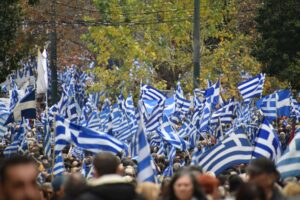
The day begins with the Divine Liturgy in Saint Spyridon’s church, and the litany follows. In recent years it has started at 11:00, and this year’s was announced for 11:00 on 1 November. Local reports say the morning liturgy was led by Metropolitan Seraphim of Kythira, with Metropolitan Nektarios of Corfu and visiting bishops concelebrating. Clergy, local officials, the town’s philharmonic bands, school pupils and scout groups all take part, and in 2025, five philharmonics marched.
Recent programmes have followed the same loop: from the church along Filarmonikis, Michail Theotoki and Evgeniou Voulgareos streets, then Viktoros Dousmani and Agoniston Polytechniou to the Palace of Saint Michael and Saint George, before returning by Eleftherias and Nikiforou Theotoki streets and the Plakada of Saint Spyridon to the church.
Two stops matter most. At the entrance to the Old Fortress the procession halts for the customary kneeling and a prayer to the saint read by the Metropolitan, and in front of the Palace a short service of supplication follows. This year the weather had its say: the customary prayer in front of the Old Fortress went ahead, but bad weather then cut the route short, and the second supplication was sung inside the church instead, with Vespers at 18:00 closing the day. In November the crowds are mostly local, which makes this litany special.
The saint’s home is his church in the heart of the Old Town, a few steps from the Liston. If you want to visit it on another day, our guide to the Church of Saint Spyridon and its relics covers the interior and how to visit, and our top 5 places to visit in Corfu puts it alongside the island’s other highlights.
Following the Philharmonic Bands Along the Esplanade
What gives a Corfiot litany its unmistakable sound is the island’s philharmonic bands (filarmonikes). The town’s three historic societies, the Palaia (Old Philharmonic), Mantzaros and Kapodistrias, march with the procession alongside other bands, playing slow processional music as the reliquary crosses the Spianada towards the Old Fortress and the Palace.
Visiting Corfu Old Town on Procession Days
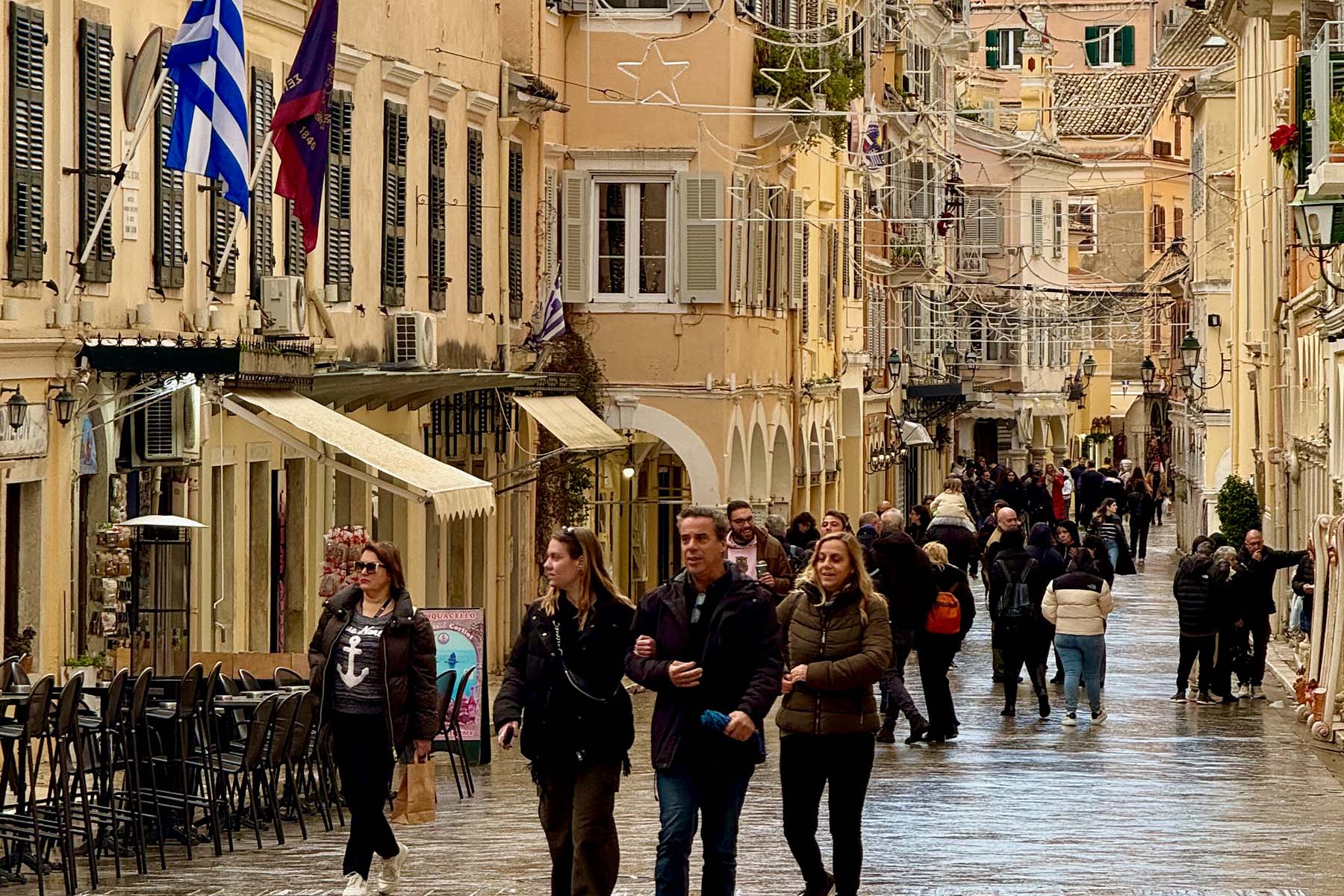
- Arrive early. The narrow streets around the church and along Nikiforou Theotoki fill quickly before the procession leaves; the open Spianada gives wider viewing space and puts you close to the stops at the Old Fortress and the Palace.
- Respect church etiquette. Cover shoulders and knees when entering the church, and be discreet with phones and cameras near the relic.
- Skip Old Town parking. Traffic and parking are restricted around the Spianada on litany days, so a pre-arranged drop-off or a guided walking tour is far easier than hunting for a space.
Discover Corfu’s Heritage with Corfu Compass NSK
Whether you are visiting for the autumn traditions or already planning ahead for Palm Sunday and Easter 2027, exploring the Old Town with a local guide brings centuries of Venetian and Corfiot history to life. Browse our Corfu coach trips and cultural tours, book the Venetian Corfu Heritage Tour or Corfu Town Day or Night Tour, or arrange private transfers into Corfu Town from anywhere on the island.
Contact Corfu Compass NSK to book your guided Corfu Town tour or private transfer.