Ask any Greek where to spend Easter, and many will name Corfu. The island’s celebrations blend Orthodox devotion with traditions shaped by centuries of Venetian rule, and the result is unlike anywhere else in the country: solemn night processions with brass bands, a morning when clay pots crash from balconies, and a midnight sky lit by fireworks. If you are thinking about Orthodox Easter in Corfu, it is worth planning months ahead. In 2027, Orthodox Easter Sunday falls on May 2.
Holy Week, the week before Easter, is when the island is at its most atmospheric. Each day has its own services and customs, but the biggest moments for visitors come on Good Friday, Holy Saturday and Easter Sunday. Below, we walk through each one and share how to plan your stay.
Why Orthodox Easter in Corfu Is Unique
Corfu was never part of the Ottoman Empire. For around four centuries it was ruled by Venice, and Western influences found their way into the island’s music, architecture and festivals. Easter is where this mix shows most clearly. The religious core is Orthodox, but the philharmonic bands, the ceremony and some of the customs carry a distinctly Venetian flavour.
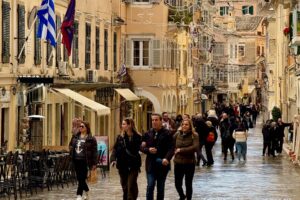
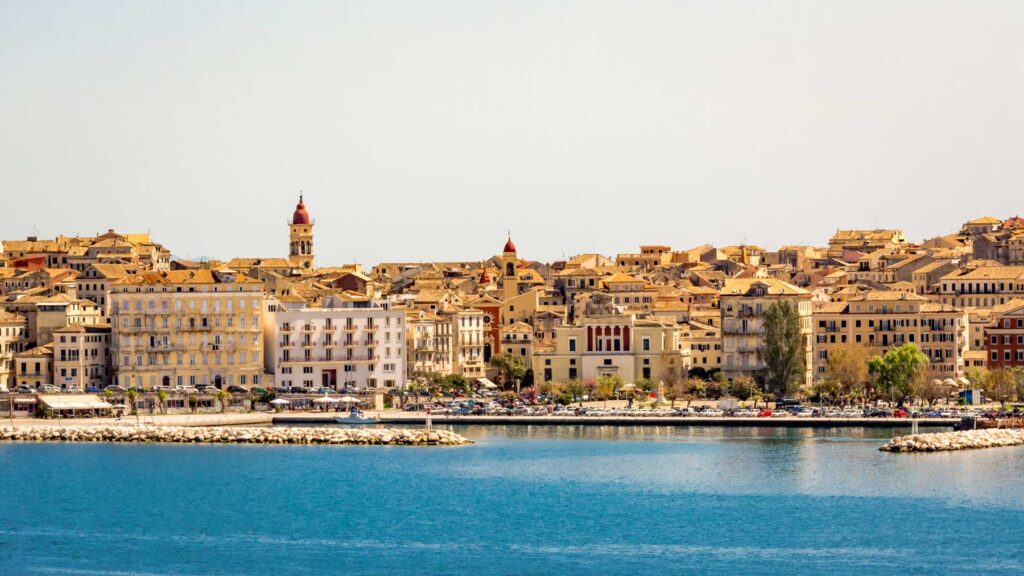
The celebrations are centred on Corfu Old Town, a UNESCO World Heritage Site, and on the wide square of the Spianada and the arcaded Liston. Our article on the Venetian legacy of Corfu Old Town explains how these streets took shape.
Good Friday: The Epitaphios Processions
On Good Friday, every parish in Corfu Town carries its Epitaphios, a bier covered in flowers representing the tomb of Christ, decorated by local women during the day, through the streets. The processions begin in the afternoon and continue into the night, each accompanied by clergy, choirs, schoolchildren and the town’s philharmonic bands playing funeral marches. Among the pieces you may hear is Albinoni’s Adagio.
The atmosphere is quiet and moving. Lights are dimmed, candles flicker along the route, and thousands of people line the narrow lanes. The Epitaphios of the Cathedral is usually among the last to pass, late in the evening.
Holy Saturday: The Litany and the Botides
Holy Saturday morning begins with a procession of the relics of Saint Spyridon, the island’s patron saint. It is one of the four annual litanies, and on this day it commemorates the saint’s protection during a famine in the 16th century.
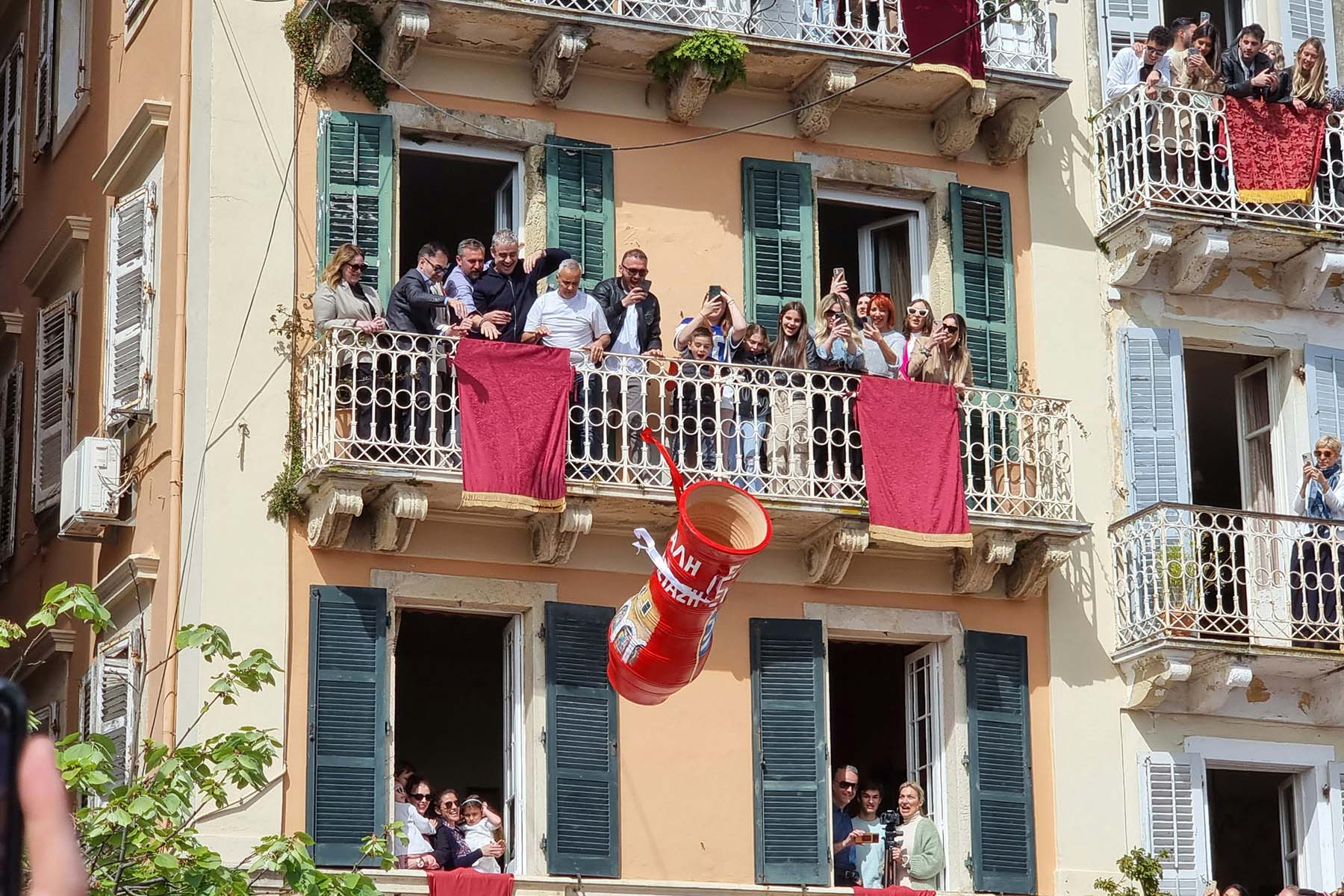
Then, at 11:00 in the morning, comes the moment Corfu is famous for. At the First Resurrection, residents in the Old Town throw large red clay pots, called botides, from their balconies and windows. They shatter on the streets below with a roar from the crowd. The custom is said to symbolise the triumph over death and the welcome of spring, and its origins are often linked to the Venetian habit of throwing out old belongings at the New Year.
Arrive early if you want a good spot near the Liston or Spianada, as the streets fill quickly. Stand where the police and stewards direct you, and keep well back from the falling pots.
The Midnight Resurrection
Late on Holy Saturday, crowds gather at the Spianada and in churches across the island holding white candles. At midnight, the priest announces “Christos Anesti”, Christ is risen. Candles are lit from the holy flame, bells ring, and fireworks burst over the Old Fortress. Families then head home or to tavernas to break the Lenten fast. Many people carry their lit candle home and use its smoke to mark a cross above the door, a custom believed to bring blessings for the year.
Easter Food in Corfu
Food is at the heart of Greek Easter. After midnight, many families eat mageiritsa, a traditional soup that marks the end of fasting. On Easter Sunday, lamb is roasted in gardens and courtyards. Corfiots also bake fogatsa, a sweet Easter bread whose name hints at its Venetian roots, alongside braided tsourekia and red-dyed eggs. For more of the island’s cooking, read our culinary journey through Corfu Old Town.
How to Plan Ahead for Easter 2027
- Book early. Easter is one of the busiest weeks of the year for Greek visitors, and Old Town hotels fill quickly.
- Arrange transport. Roads into Corfu Town close for processions, and parking is very limited. A pre-booked private transfer takes the stress out of arriving and leaving.
- Hire a car for the rest of the week. Spring is a lovely time to explore the countryside, and car rental in Corfu lets you visit villages celebrating in their own way.
- Expect crowds. The Old Town is packed on Good Friday night and Holy Saturday morning, so keep children close and agree a meeting point.
- Dress respectfully. Cover shoulders and knees for church services.
Discover Corfu’s Heritage with Corfu Compass NSK
To understand the history behind the celebrations, join the Venetian Corfu Heritage Tour through the Old Town’s squares, churches and fortresses. Corfu Compass NSK, a local agency based in Roda, can also help with transfers and car hire for your Easter stay.
Contact Corfu Compass NSK to plan your Orthodox Easter in Corfu.