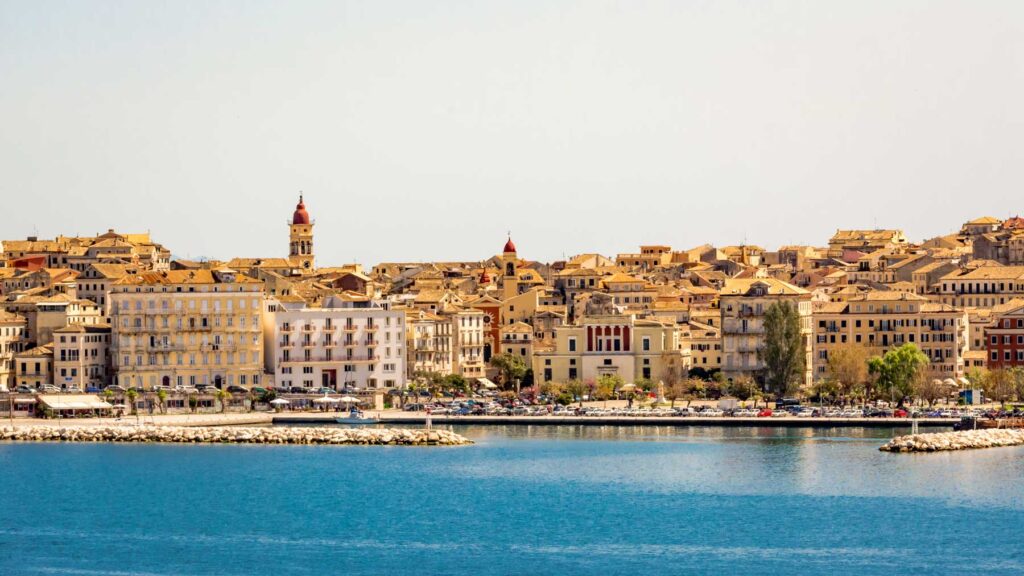
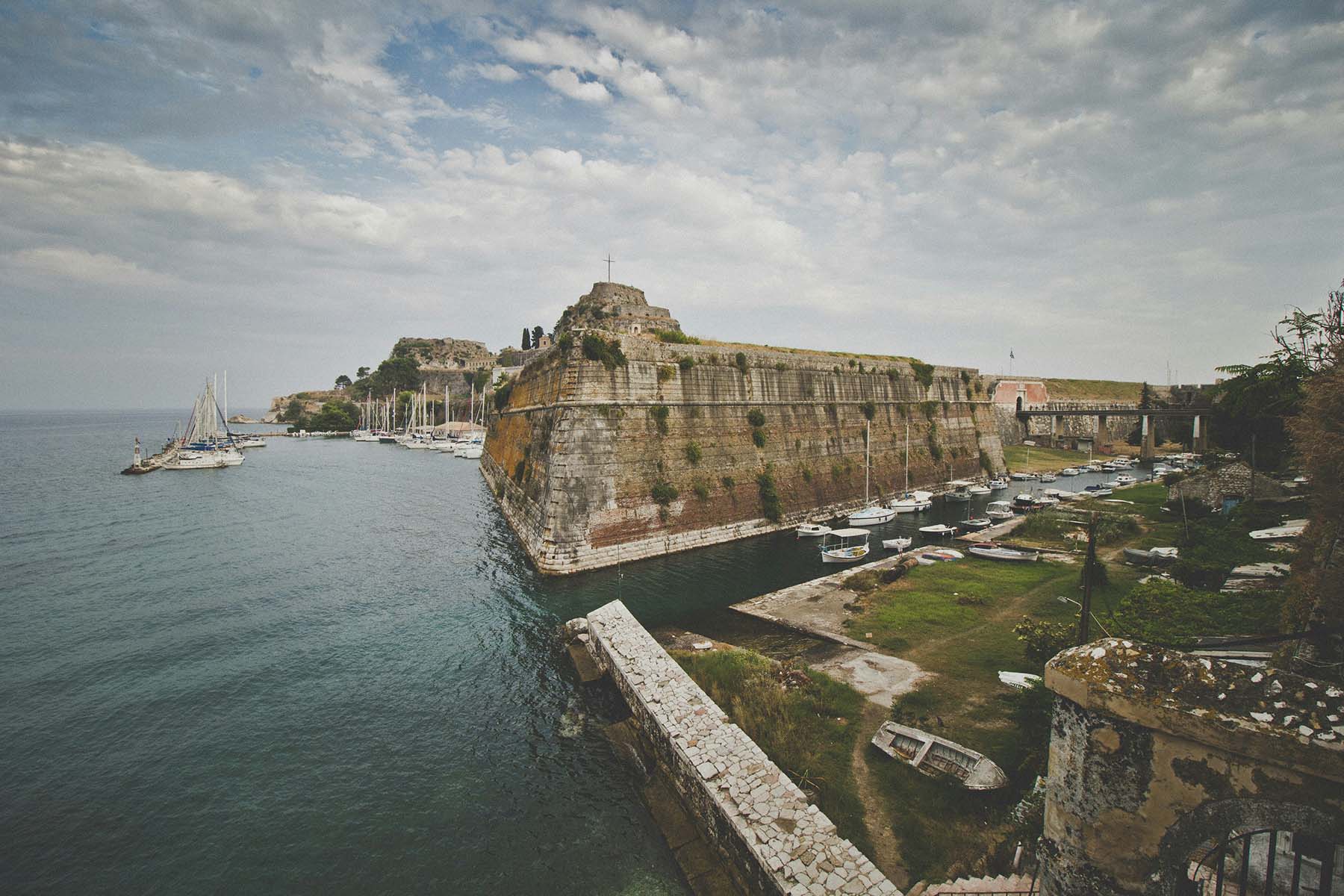
Look out from the Old Port of Corfu Town and the small green island just offshore is Vido. Today it is a quiet place of pine woods and footpaths, but a little over a century ago it was the scene of one of the saddest chapters of the First World War. The story of the Serbian army Corfu sheltered in 1916 is little known to most visitors, yet for Serbs it is a place of pilgrimage, and the waters around Vido have a name of their own: the Blue Tomb.
The Great Retreat
In late 1915, Serbia was invaded from several directions by the armies of Austria-Hungary, Germany and Bulgaria. Rather than surrender, the Serbian army, the government, the elderly King Peter and many civilians retreated on foot across the mountains of Montenegro and Albania towards the Adriatic coast.
The retreat took place in the depths of winter, with little food and no shelter. Tens of thousands died of cold, hunger, disease and attack along the way. The survivors who reached the Albanian coast were exhausted and starving, and many were already seriously ill.
Evacuation to Corfu
The Allies, led by France, decided to evacuate the survivors to Corfu. In January and February of 1916, ships carried around 150,000 Serbian soldiers and refugees across to the island. Corfu at the time was under Allied control, and it became a place to recover, reorganise and rebuild an army.
For many, it was too late. The sickest men were taken to a field hospital set up on Vido, where doctors and nurses struggled with typhus, dysentery and exhaustion. The death rate was terrible, and in the first weeks hundreds of men died every day.
The Blue Tomb
Vido is small and rocky, and there was simply not enough ground to bury the dead. So the bodies were taken out by boat and buried at sea in the channel near the island. Over 5,000 men were laid to rest this way, and in total many thousands more died on Vido and in the camps across Corfu.
The Serbian poet Milutin Bojić, who witnessed the burials, wrote a poem called “Plava grobnica”, the Blue Tomb, which became one of the best-known works in Serbian literature. The name stuck. Serbian ships passing Vido still slow down and pay their respects, and the stretch of water is treated as a sacred place.
A Government in Exile in Corfu Town
While the army recovered, the Serbian government and parliament moved to Corfu Town. The city became, for a few years, the effective capital of Serbia in exile. Ministers worked from buildings in the old town, and the Serbian National Assembly held its sessions in the Municipal Theatre, which was later destroyed in the German bombing of 1943.
In July 1917, representatives of the Serbian government and the Yugoslav Committee signed the Corfu Declaration. It set out the plan for a united state of Serbs, Croats and Slovenes after the war, and it led to the creation of the kingdom that later became Yugoslavia. For a small Greek island, it is a remarkable footnote in the history of the Balkans.
The recovered Serbian army, re-equipped by the Allies, was shipped from Corfu to the Salonika front, where it played a key part in the Allied breakthrough of 1918.
What You Can See Today
The Vido Mausoleum. On Vido, a mausoleum built in 1938 holds the remains of around 2,700 Serbian soldiers who died on the island, of whom only some are known by name. It is a simple, dignified building set among the trees, with a small memorial chapel. Nearby are other memorials and a plaque facing the Blue Tomb.
Walking the island. Beyond the memorials, Vido has shaded paths through pine woods, small pebble beaches and old Venetian and British fortifications. It is an easy half-day trip and a peaceful escape from the town.
The Serbian House museum. In Corfu Town, on Moustoxydou Street in the old town, the Serbian House is a small museum dedicated to the Serbian presence on the island. It displays photographs, uniforms, documents and personal belongings from 1916 to 1918, and gives a clear picture of how the army lived and recovered here. Check opening hours in advance, as they are limited outside summer.
Other memorials. Around the island you will also find a Serbian cemetery and memorials near Gouvia and Kontokali, where many soldiers camped and recovered.
Getting to Vido
Small boats run from the Old Port in Corfu Town to Vido, a crossing of only ten to fifteen minutes. Services are most regular in summer and can become irregular or stop entirely later in the autumn, so ask at the port or check locally before you plan your visit. Bring water, as facilities on the island are very limited out of season.
Visiting Respectfully
For many Serbian visitors, Vido is a place of mourning, and groups often come to lay wreaths and hold services. Dress modestly at the mausoleum, keep voices low, and take a moment at the memorial facing the sea. Understanding the story first makes a visit far more meaningful.
Discover Corfu’s History with Corfu Compass NSK
The story of the Serbian army connects Vido, the old town and the memorials around the island. Corfu Compass NSK offers guided tours of Corfu Town and the interior, and transfers to the Old Port, so you can explore this remarkable piece of history with local knowledge.
Contact Corfu Compass NSK to arrange a history tour of Corfu Town and Vido.