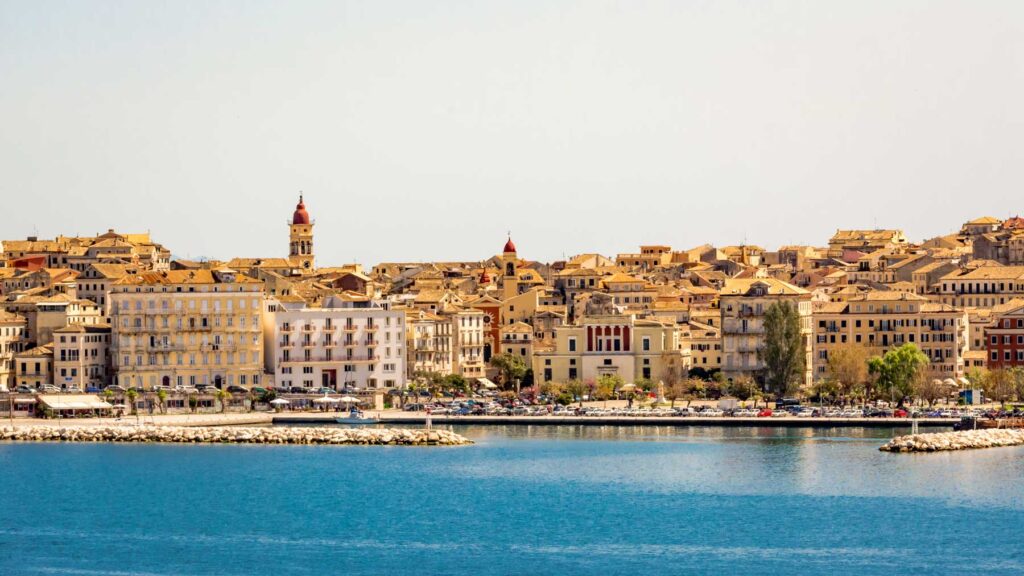
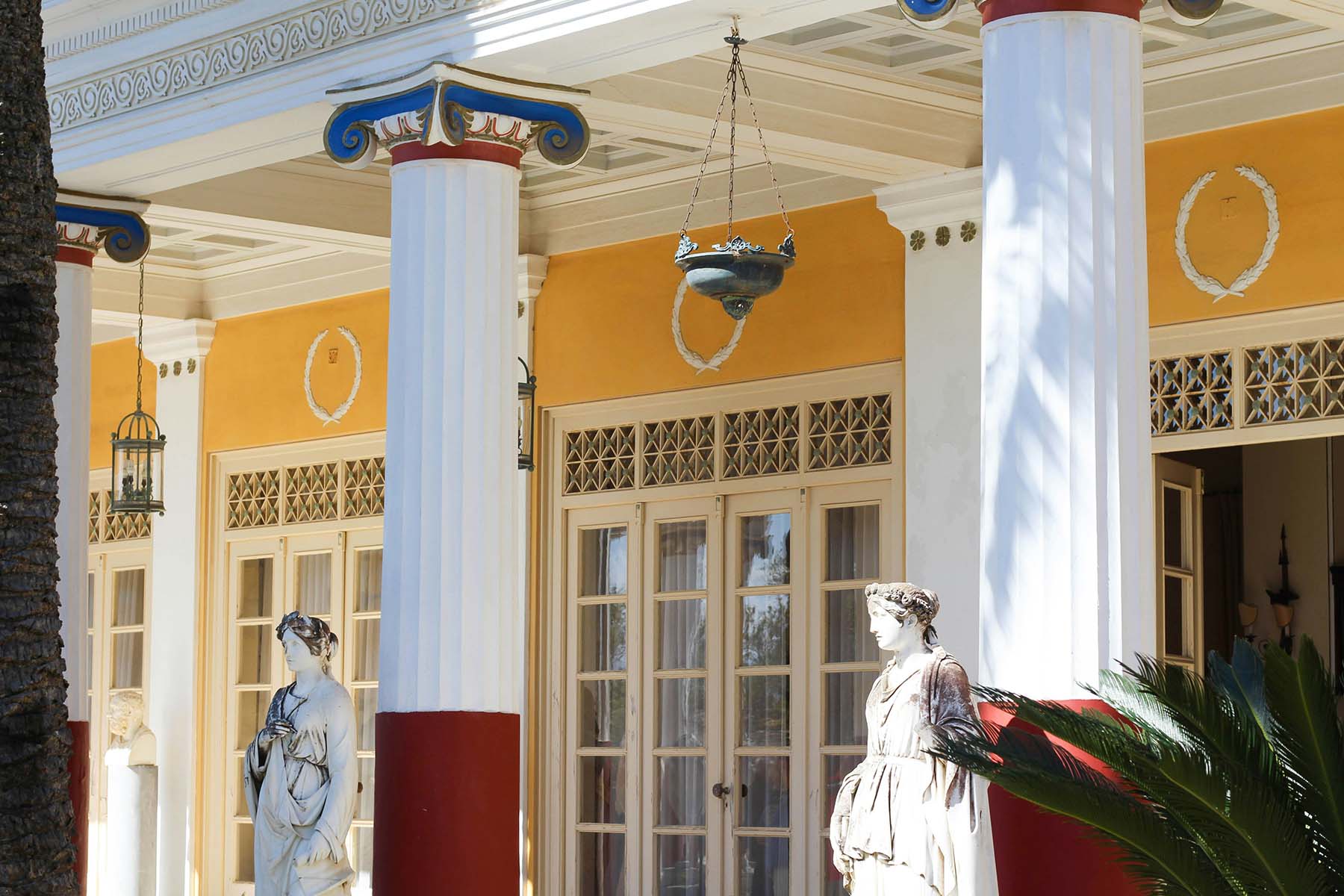
South of Corfu Town, above the village of Gastouri, a pale palace rises out of the hillside surrounded by gardens full of statues from Greek mythology. This is the Achilleion — built not by a Corfiot noble or a Venetian governor, but by one of the most famous women in 19th-century Europe.
Who Was Empress Sisi
Elisabeth of Austria, known to history as “Sisi,” was the wife of Emperor Franz Joseph I of Austria-Hungary and one of the most photographed royals of her era. Restless and famously reluctant to spend time at court, she traveled constantly through her later life, and Corfu became one of her favorite retreats — a place to escape the formality of Vienna.
Why She Chose Corfu
Sisi had the Achilleion built in the late 1880s as a personal palace, completed in 1890, away from the pressures of imperial life. She named it after Achilles, the Greek hero from the Iliad, whom she deeply admired for his combination of strength and tragic vulnerability — themes that run through the palace’s entire design.
A Palace Built Around Greek Mythology
The Achilleion is unlike anywhere else on the island: statues and frescoes throughout the palace and its gardens depict scenes from Achilles’ story, alongside figures from across Greek mythology. The most striking piece is a large statue of the Dying Achilles, wounded at the heel, positioned in the garden with sweeping views over the coastline below. It’s a very different kind of historic site from Corfu’s Venetian fortresses or Byzantine churches — European romanticism dressed in classical Greek imagery.
The Gardens and the View
The palace’s terraced gardens are as much a reason to visit as the building itself, laid out with mythological statues, shaded walkways, and one of the best elevated views over Corfu’s southeast coast. Visitors often spend as long outside as they do inside.
After Sisi: A Palace That Changed Hands
Following Empress Elisabeth’s assassination in 1898, the Achilleion passed through several owners before German Kaiser Wilhelm II purchased it in the early 1900s, using it as his own occasional retreat until the outbreak of the First World War. That layered history — Austrian empress, German kaiser, and later Greek state property — is part of what makes the site distinct from Corfu’s older Venetian and ecclesiastical landmarks.
Visiting the Achilleion Today
The palace now operates as a museum, with rooms open to the public displaying period furniture, royal memorabilia, and the building’s original decor alongside the mythological artwork. It’s a manageable visit — most people spend one to two hours touring the interior and gardens — and pairs well with a wider day exploring the south of the island.
Plan Your Visit with Corfu Compass NSK
The Achilleion sits inland from the coast, and having your own car makes it easy to combine with other stops in the south of the island on the same day. Corfu Compass NSK’s car rental gives you the flexibility to set your own pace.
Contact Corfu Compass NSK to arrange your rental car today.